
The Trial Delusion
There's a belief that runs so deep in SaaS culture it's rarely questioned: build a great product, offer a free trial, and the product will sell itself.
It sounds logical. Give people access. Let them experience the value. Once they see what it can do, they'll happily convert to paying customers.
Except that's not what happens. The industry average for free trial to paid conversion sits between 2–5% for opt-in trials. That means for every 100 people who sign up — people who were interested enough to give you their email and create an account — 95 or more walk away.
The standard diagnosis is "the product needs work" or "we need better onboarding." But the real problem started long before anyone clicked "Start Free Trial."
The Customer Arrives Unprepared
Here's what actually happens when someone starts a typical SaaS trial:
They saw an ad. They read some feature bullet points. Maybe they watched a 60-second product tour video. They thought "this looks useful" and signed up. Then they log in and face a dashboard full of possibilities — with no clear idea of what to do first, what "good" looks like, or how this tool fits into their specific situation.
The trial clock starts ticking. They poke around for 10 minutes. They get distracted. They come back three days later, feel overwhelmed, and never log in again. On day 14, the trial expires. Another lost customer.
The trial didn't fail because the product was bad. It failed because the customer didn't yet know what they were trying to achieve, how to achieve it, or why this particular tool was the right vehicle for their goals.
Education Creates the Context for Value
The companies that consistently convert trials at 3–5× the industry average do something different. They don't let customers anywhere near the product until those customers already understand:
The problem — not in abstract terms, but in specific, personal terms that relate to their situation
The methodology — the approach or framework that solves the problem, independent of any tool
How to extract value — the specific actions they need to take inside the product to get results from day one
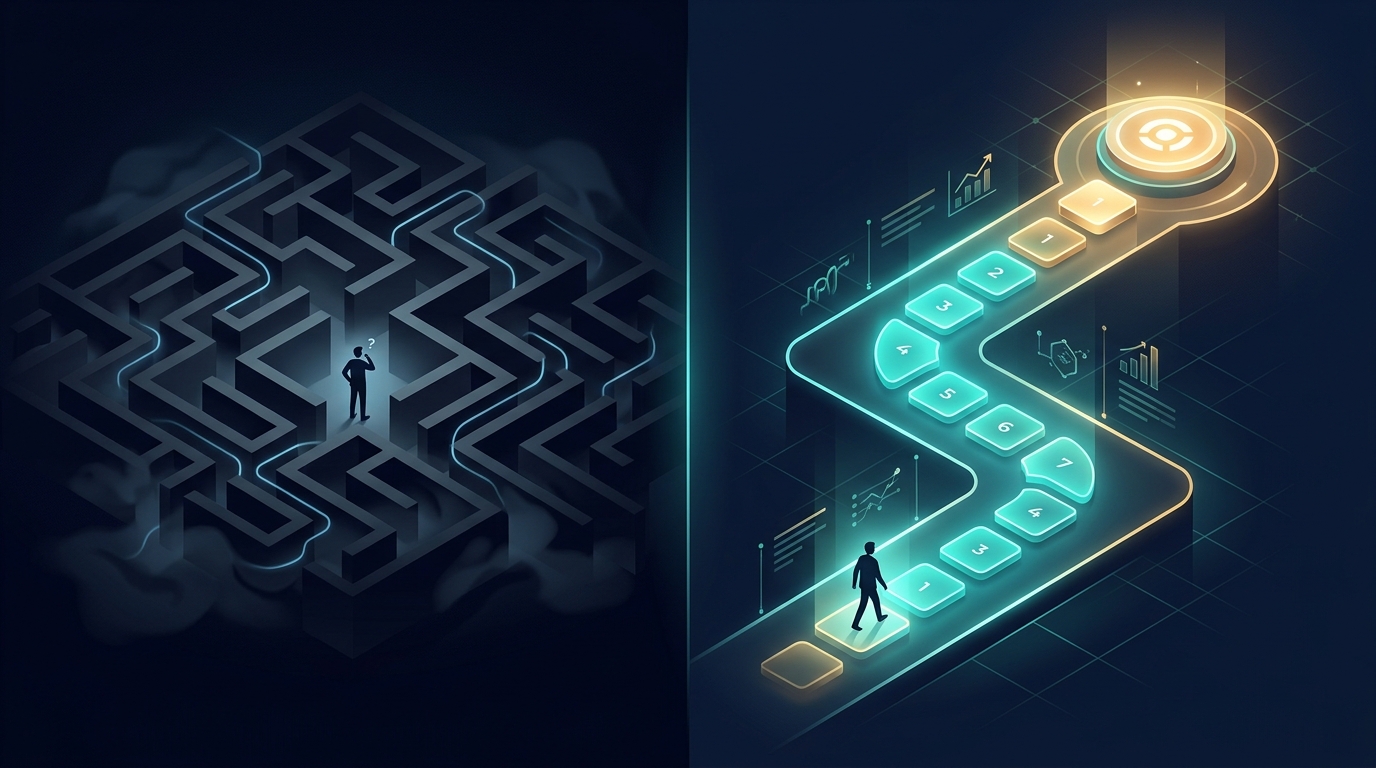
When a customer arrives at their trial already knowing what to do, the experience is transformed. They log in with a plan. They execute immediately. They see results within the first session. The trial period becomes confirmation of value, not exploration of confusion.
This is the difference between a 3% conversion rate and a 40%+ conversion rate. Same product. Different preparation.
The ClickFunnels Blueprint: Selling Education, Bundling Software
Consider ClickFunnels — a platform that charges significantly more than its competitors for what is, at its core, a website and funnel builder. On paper, tools like WordPress, Webflow, or any number of page builders offer more features at a fraction of the cost.
Yet ClickFunnels bootstrapped to over $140 million in annual recurring revenue and 100,000+ paying customers without a single pound of outside investment. How?
Their breakthrough came when co-founder Russell Brunson created a $997 training programme called "Funnel Hacks" and bundled the ClickFunnels software for free. At the first event where he offered this, 45% of the room purchased.
Think about what happened there. People weren't buying software — they were buying the knowledge of how to use it. The software was a tool that enabled what they'd learned. And because they arrived at ClickFunnels already knowing the strategy, the methodology, and the specific actions to take, they got results immediately.
ARR, fully bootstrapped
Close rate from educated audiences
Premium over commodity competitors
The customers who went through the training didn't churn. They didn't need hand-holding. They didn't submit support tickets asking "how do I...?" They were productive from the moment they logged in — and they stayed for years because they understood not just how to use the tool, but why it was the right tool for their strategy.
The Double Failure: Poor Onboarding Meets Premature Silence
Most SaaS companies make two compounding mistakes that virtually guarantee trial failure:
Mistake 1: Onboarding as an Afterthought
The onboarding experience is often a perfunctory product tour — tooltips pointing at buttons, a progress bar showing "profile 70% complete," maybe a template gallery. This isn't education. It's decoration. Real onboarding teaches the customer the strategy behind the actions, not just where to click. It shows them what success looks like and gives them a concrete path to get there within their first session.
Mistake 2: The Selling Stops at Sign-Up
There's a dangerous assumption that once someone signs up for a trial, the selling is done. The product team takes over from the marketing team. The messaging shifts from "here's why this matters" to "here's what this does." But the customer hasn't bought anything yet. They're still deciding. And in that critical window, most companies go silent — sending nothing more than a drip sequence of feature announcements and usage tips. The emotional momentum that drove the sign-up evaporates within hours.

The companies that win don't stop selling after sign-up. They continue making the case — through stories, results, education, and inspiration — throughout the entire trial period and beyond. The sale isn't a moment. It's a continuous process.
Why the Best Sellers Win — Not the Best Builders
This is the uncomfortable truth that most product-led SaaS founders resist: in competitive markets, the companies that are best at selling win — not the companies with the best product.
History is littered with examples. First movers with superior technology lose to later entrants who are better at acquisition and retention. Technically inferior products dominate market share while elegant solutions struggle for traction. The pattern repeats because building a great product is necessary but not sufficient. You still need to:
- →Help people understand why they need it
- →Teach them how to extract value from it
- →Continue reinforcing why it's worth paying for
- →Make them feel the cost of not using it
ClickFunnels charges roughly 10× what a traditional website builder costs. On a feature-for-feature comparison, many cheaper tools offer more flexibility. But ClickFunnels customers get results — because they arrived already knowing the strategy, the framework, and the implementation path.
Meanwhile, users of "better" tools at lower price points build poor websites, get no results, and churn — not because the tool failed them, but because nobody taught them how to succeed with it. The tool with the education ecosystem wins. Every time.
The Fix: Pre-Trial Education
The solution isn't better onboarding flows or cleverer tooltip sequences. It's re-engineering what happens before the trial begins. Here's the framework:
Teach the Strategy First
Before anyone touches your product, teach them the methodology that makes the product valuable. Webinars, masterclasses, email sequences that educate on the "why" and "how" — independent of any tool.
Define the "Day One Win"
Before the trial starts, the customer should know exactly what they're going to build or achieve in their first session. Not explore. Not discover. Achieve. Give them a specific, concrete outcome they can complete in under 30 minutes.
Continue Selling Through the Trial
Don't go quiet after sign-up. Intensify the communication — with stories of similar customers, specific use cases, quick wins they should try, and reminders of what's possible. The trial period should feel more energising than the marketing that preceded it.
Make the Free Tier Self-Liquidating
If you sell the education (even at a low price) and bundle the trial for free, you cover acquisition costs on day one and attract only people who are genuinely committed to learning. This is the ClickFunnels model — and it works because it filters for quality while funding growth.
The Uncomfortable Conclusion
If your trial conversion rate is below 10%, the problem almost certainly isn't your product. It's that you're putting unprepared people into a self-serve experience and hoping they figure it out.
The fix isn't making the product simpler (though that helps). The fix is making the customer smarter before they encounter the product. Teach them the strategy. Show them what success looks like. Give them a plan for their first session. Then — and only then — open the door.
And once they're inside, don't stop. The companies that dominate competitive SaaS markets are the ones that never stop selling, never stop educating, never stop making the case for why this tool — at this price — is worth every penny.
The best product doesn't always win. But the best product with the best education engine? That's nearly unstoppable.
Related

Why Education Should Come Before the Sale
Ready to Fix Your Trial Conversion?
We help SaaS companies build pre-trial education systems that transform conversion rates. If your free trial is leaking customers, the fix starts before they ever log in.
Start a Conversation